COSMETIC MOLE AND SKIN TAG REMOVAL
Oct 20, 2026
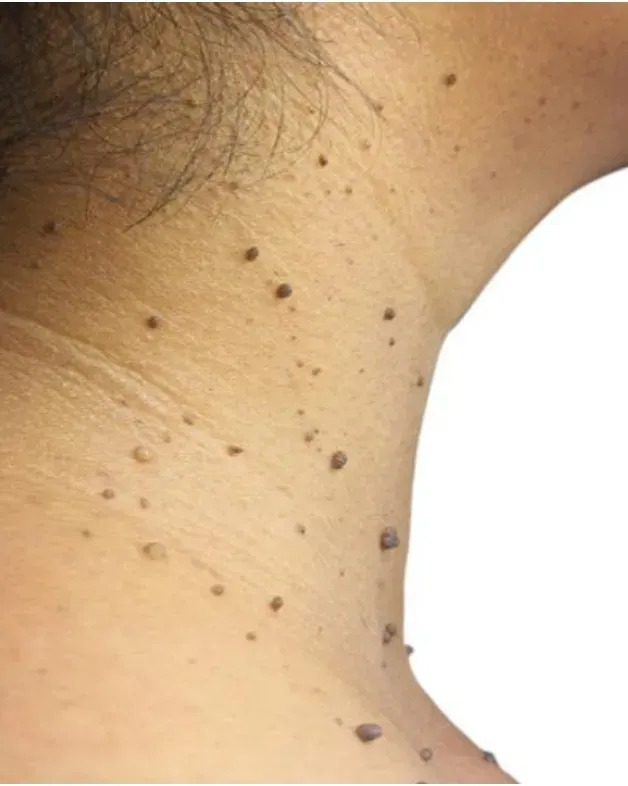
COSMETIC MOLE AND SKIN TAG REMOVAL
Professional cosmetic removal of moles and skin tags is a safe, quick outpatient/in-office medical and aesthetic (non-surgical) procedures performed using local anesthesia or targeted energy.
Non-surgical (minimally invasive or non-scalpel) mole and skin tag removal options rely on freezing, burning, or laser energy performed by a medical professional, rather than major surgical excision with stitches.
NON-SURGICAL REMOVAL METHODS
FOR SKIN TAGS:
• Cryotherapy (Freezing): Liquid nitrogen is applied to freeze the base of the skin tag, destroying the tissue so it naturally falls off within 10 to 14 days.
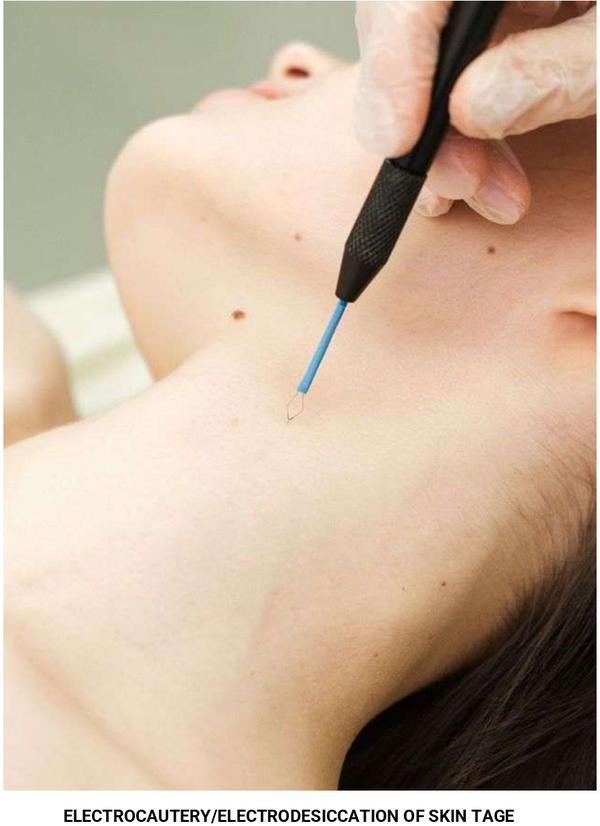
• Electrocautery / Electrodesiccation: Best for skin tags. A high-frequency electrical current or pen-like device burns away the tissue while sealing blood
vessels to prevent bleeding.
• Ligation: A tiny band is tied tightly around the base of the skin tag to cut off its blood supply, causing it to wither and drop off.
FOR MOLES:
• Cryotherapy: Liquid nitrogen may be used for small, benign, superficial
pigmented lesions.
• Electrocautery (Burning): Best for small, superficial moles. A heated electric wire or current is used to burn off raised, non-cancerous mole tissue.
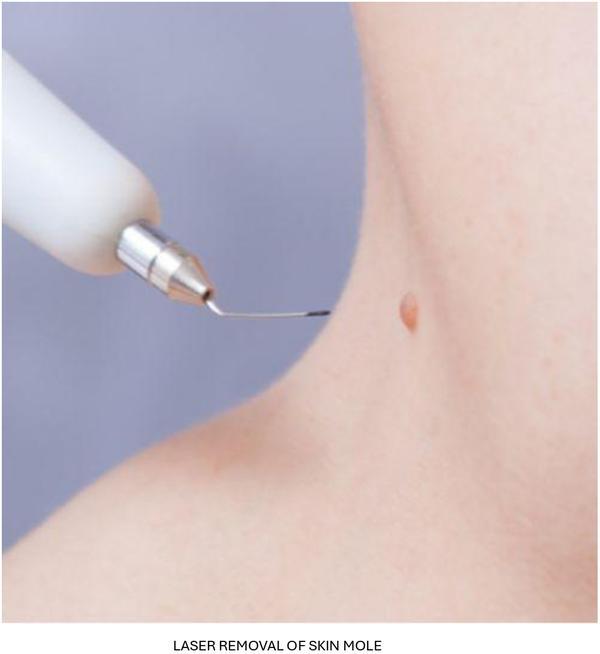
• Laser Removal: Best for flat, superficial, and small moles. Certain pigmented or
flat benign moles can be targeted and faded or ablated using specialized medical
lasers (though deep or suspicious moles require physical biopsy/excision).
Why Professional Evaluation Matters:
• Cancer Risk: Professional Evaluation: Moles should be checked by a
dermatologist or healthcare provider before cosmetic removal to ensure they are
not atypical or a form of skin cancer like melanoma, which should never be
treated with non-surgical burning or freezing.
• Risks of DIY / At-Home Kits: Over-the-counter freezing kits, removal creams, or
tying/cutting things at home carry high risks of severe skin irritation, chemical
burns, uncontrollable bleeding, infection, and permanent scarring.
AFTERCARE BASICS
• Keep the treated area clean and dry.
• Apply an ointment like Vaseline or Aquaphor as directed by your clinician.
• Allow the natural scab to form and fall off on its own over 1 to 3 weeks to
minimize scarring